Salama!
A short flight from Nairobi took me to Comoros, an island nation located between Madagascar and Mozambique. My seat companion was excited. It was his first time home in ten years. He, like many Comorans, lives in France. The immigration official quizzed me, ‘Why am I coming to Comoros?’ Shortly after, a power outage shut off the lights and stopped the baggage carousel.
As we drove from the airport, hillsides were covered in black lava boulders, homes were half-built or abandoned, and roadsides were littered with car-wrecks and rubbish. Had I stumbled across a Mad Max film set? Is there something that ‘Smart Traveller’ hadn’t told me? Maybe the immigration official had a point. Why had I come to Comoros?
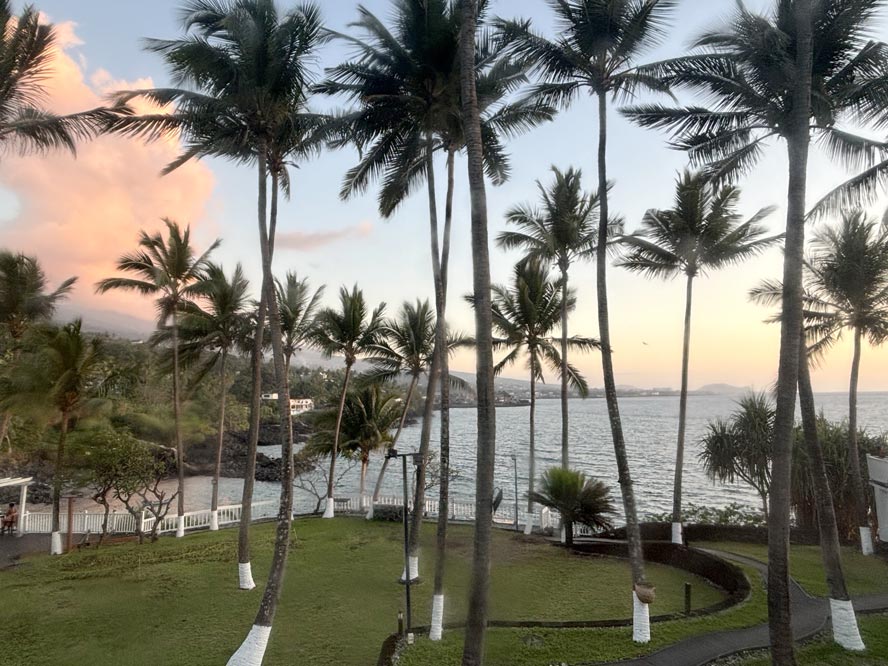
The mini-van veered into Itsandra Resort. Calmness prevailed and I was led through the gardens, past a row of palm trees, past a bale of tortoises, to my room. Before me was a stunning view of the Indian Ocean; waves crashed and splashed over black lava boulders. I had my answer.
Comoros is one of the world’s least visited countries. Tourism is new to the country. I was travelling with a small group, nine of us altogether. At our first meeting I bumped into a familiar face. It was Rod; we first met twelve years ago, cruising up the west coast of Africa. What were the odds?!
Comoros is Arabic for ‘islands of the moon’. It’s a tiny country, 2235 square kilometres. A French-speaking Muslim country in Africa. The country comprises of three main islands: Grande Comore, Mohéli and Anjouan as well as many smaller islands.
The 900,000 population of Comoros is a melee of African and Arabic cultures. France took possession of the islands in 1841. In 1975 the country declared independence.
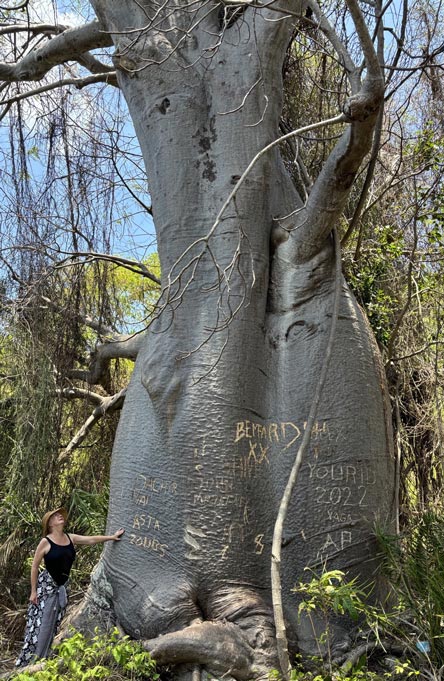
We toured Comoros’s main island, Grande Comore, passing beaches, baobab trees and a smoking volcano. The volcano is one of the world’s most active volcanos, last erupting in 2007.
At the beach fishermen hauled in their catches. The country is a fish and farming country. Abandoned and half-constructed houses are scattered over the island. The houses are built in increments as money flows in, and are completed once a couple is married.
A wedding costs €15,000. A huge sum in this poor country. Some of the roads are excellent, some are severely pot-holed. You can tell where China has been! Constructing roads in other countries is a Chinese hallmark. China has also funded the construction of Comoros’ National Parliament building.
A 20-minute flight took us to the neighboring island of Mohéli. Though the flight was short, upon arrival we queued for an hour awaiting testing. Monkeypox? our first thought, however the test was for malaria.
Comoros had eradicated malaria after immunizing the entire population. Recently there has been an increase in cases.
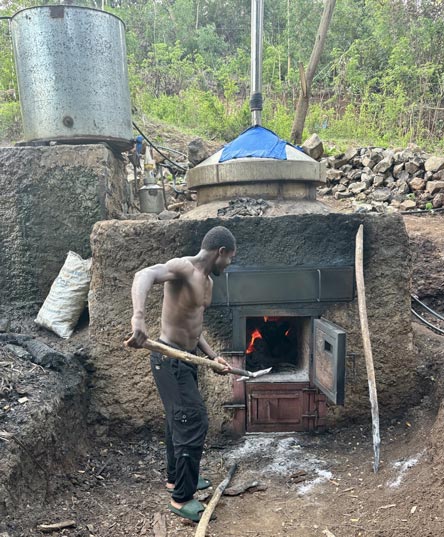
On Mohéli fragrant scents tantalized our senses; vanilla, cloves and ylang-ylang. It’s no surprise that Comoros is known as the ‘Perfume Isles’. It is the world’s largest producer of ylang-ylang. These flowers form the base of the famous Chanel No 5 perfume.
At Mohéli we stay at Laka Lodge. Every day we swam in the warm waters of the Indian Ocean. Snorkeling in the reef revealed a wondrous other world. Sunlight shimmered as tropical fish added a myriad of colours to coral reefs. Green turtles swam in the waters, and up in the hills colonies of giant Livingstone bats nested in the trees.
There are a number of significant turtle nesting sites on the island. Local villagers once ate turtles and turtle eggs, but now they are involved in protecting turtles, promoting ecotourism.
Late one afternoon we wandered along the beach. Our guide excitedly beckoned to us as a bale of tiny turtle hatchlings emerged from their burrow. As they commenced their first walk to the sea we watched enthralled. Later that evening we returned to the beach.
Giant green turtles had come ashore to lay their eggs. They burrow in the sand, lay their eggs, bury them then return to the sea. We watched, mesmerized, as she laid about 60 eggs.
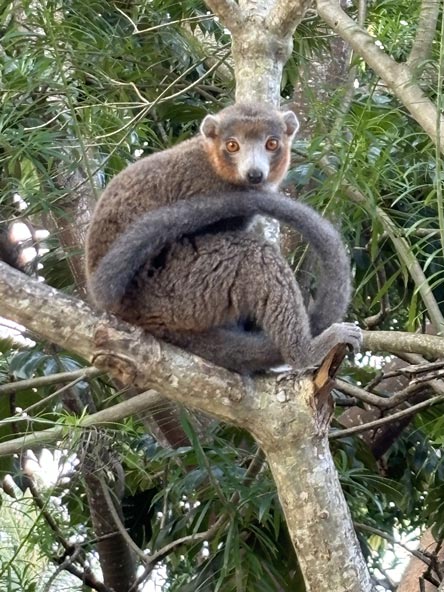
Mohéli had another delight in store for us. Every afternoon mongoose lemurs shimmied down the trees in search of bananas. These little guys leapt from branch to branch, once again captivating us. There’s is only one lemur species in Comoros, in Madagascar there are over one hundred.
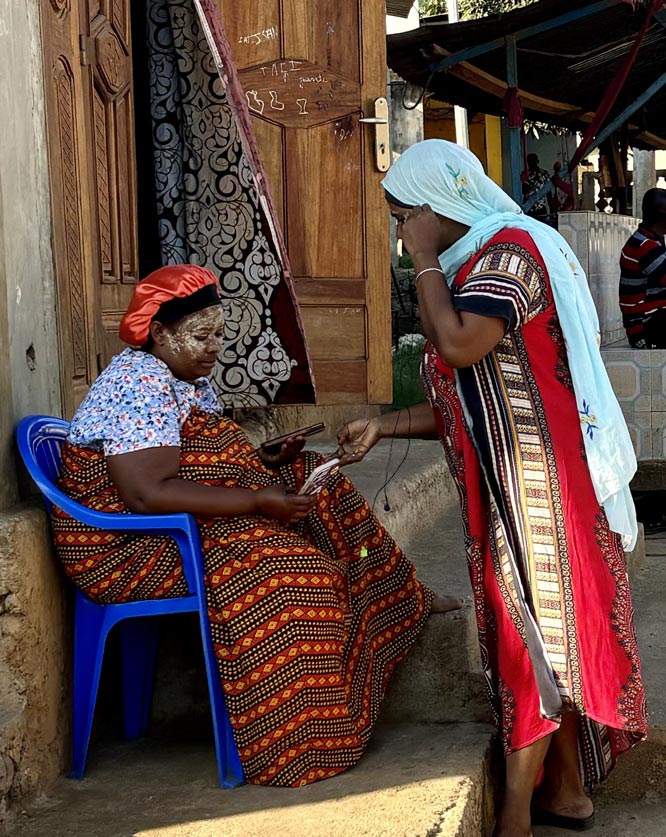
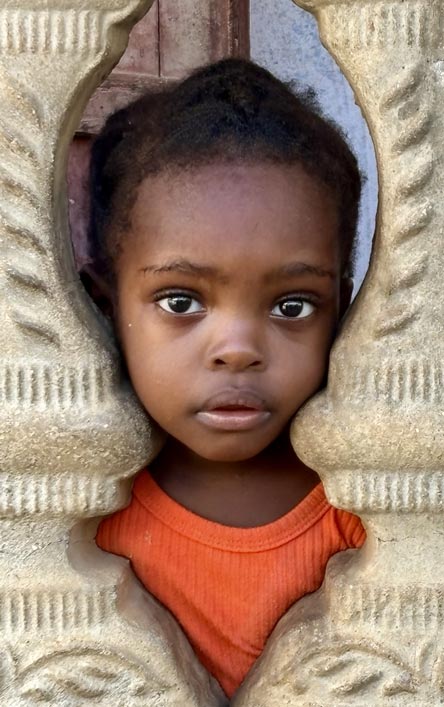
A walk through the village was an opportunity to graze on Comoran life. Kids played in the street, men were intent on mancala, an African board game, but mostly people sat about in front of their houses taking in everyday life.
Many women had whitened their faces, considered a sign of beauty. The people are friendly, quiet, gentle and conservative. In the centre of every village there is a mosque, the call to prayer punctuating the day.
There is little crime here. You’d almost wonder why there was a need for prisons.
A few years ago, the on-duty prison guards were celebrating Comoros’ football victory over Kenya. They didn’t notice 40 prisoners walk out through the front gate. That night everyone was happy!
Once again Comoros is jubilant, this time it’s the Comoros victory over Tunisia in the African league. This time I think the prison guards might be more vigilant.
Another nickname for Comoros is ‘the coup-coup islands’. Since independence in 1975 there have been over 20 coups and secession attempts.
On average, a coup is attempted in Comoros every two years. Yet again there is corruption at the head of this tiny peaceful country.
Comorian cuisine, like its culture, is a fusion of African, Arab, and French. Traditional dishes generally feature seafood, coconut, rice, and spices. It’s delicious and unique. Yet again the diet was postponed. Every evening a delicious buffet was presented to us.
But then below us was a buffet of a different kind, as mozzies nibbled at our feet. Below that the lizards ate the mozzies. Ah, the food chain! Being on top of the food chain isn’t always best.
After ten days in Comoros it was time to return to the airport. Grand Comoros is striking. Green vegetation clings to the hillside as black lava boulders tumble down to shimmering white beaches.
Mountain tops are shrouded in mist. Travelers are always seeking new destinations and Comoros has a great future in ecotourism. It just has to address the issue of the rubbish first.
Still travelling,
Ros